Last updated November 22, 2026
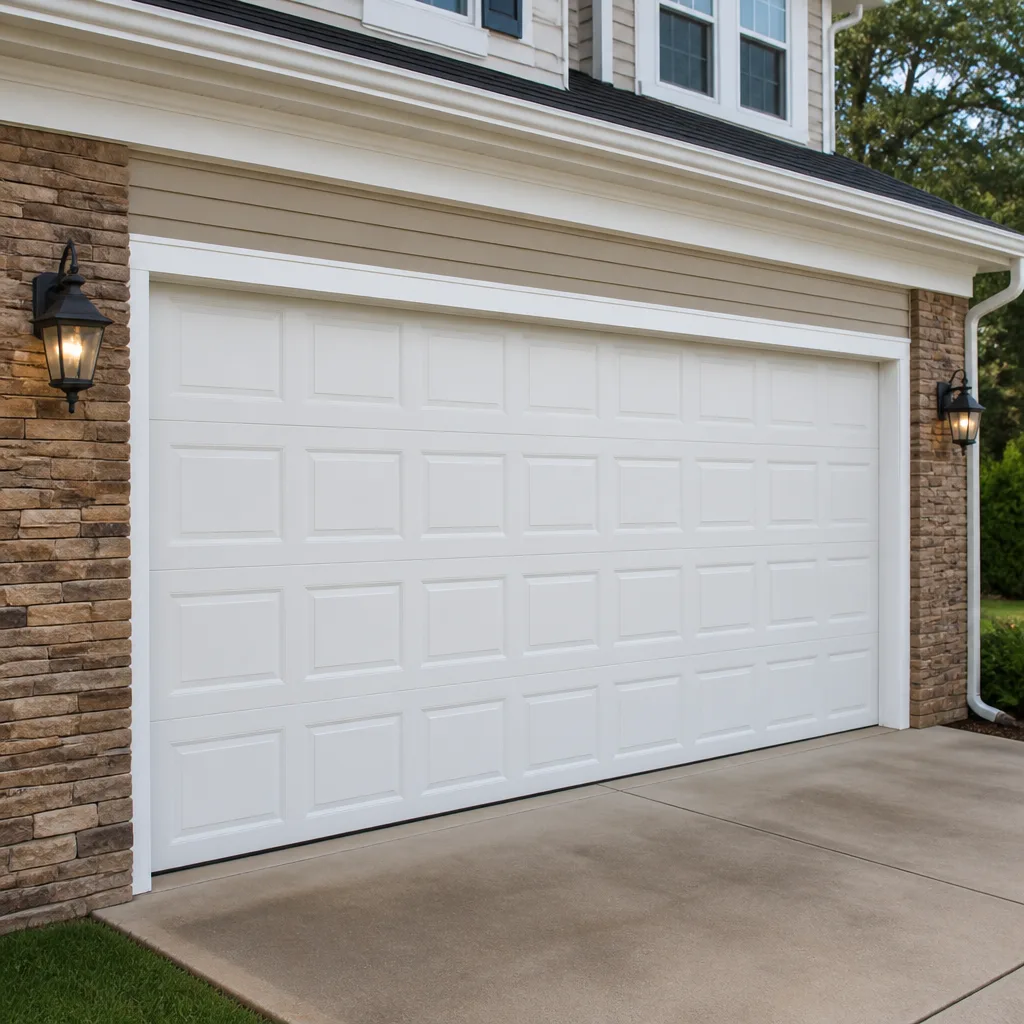 Raised-panel steel
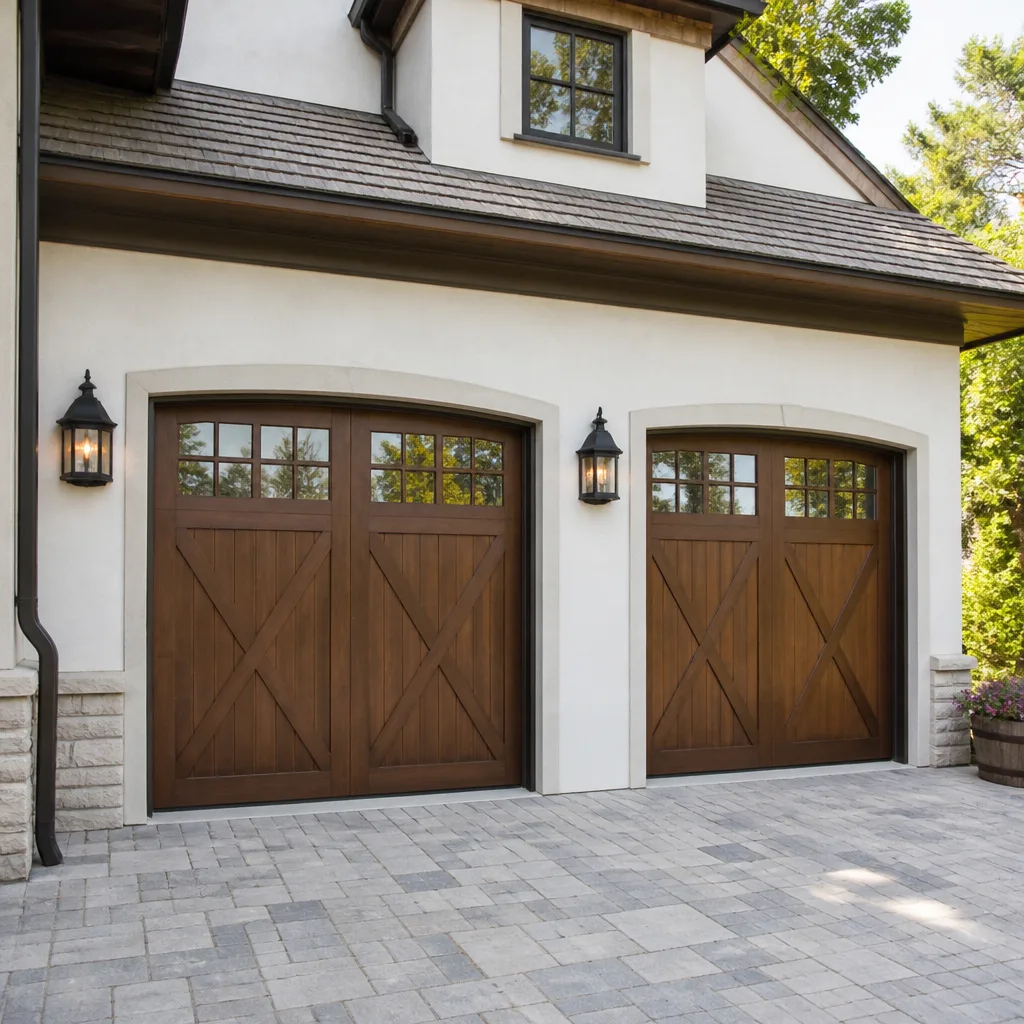 Carriage house
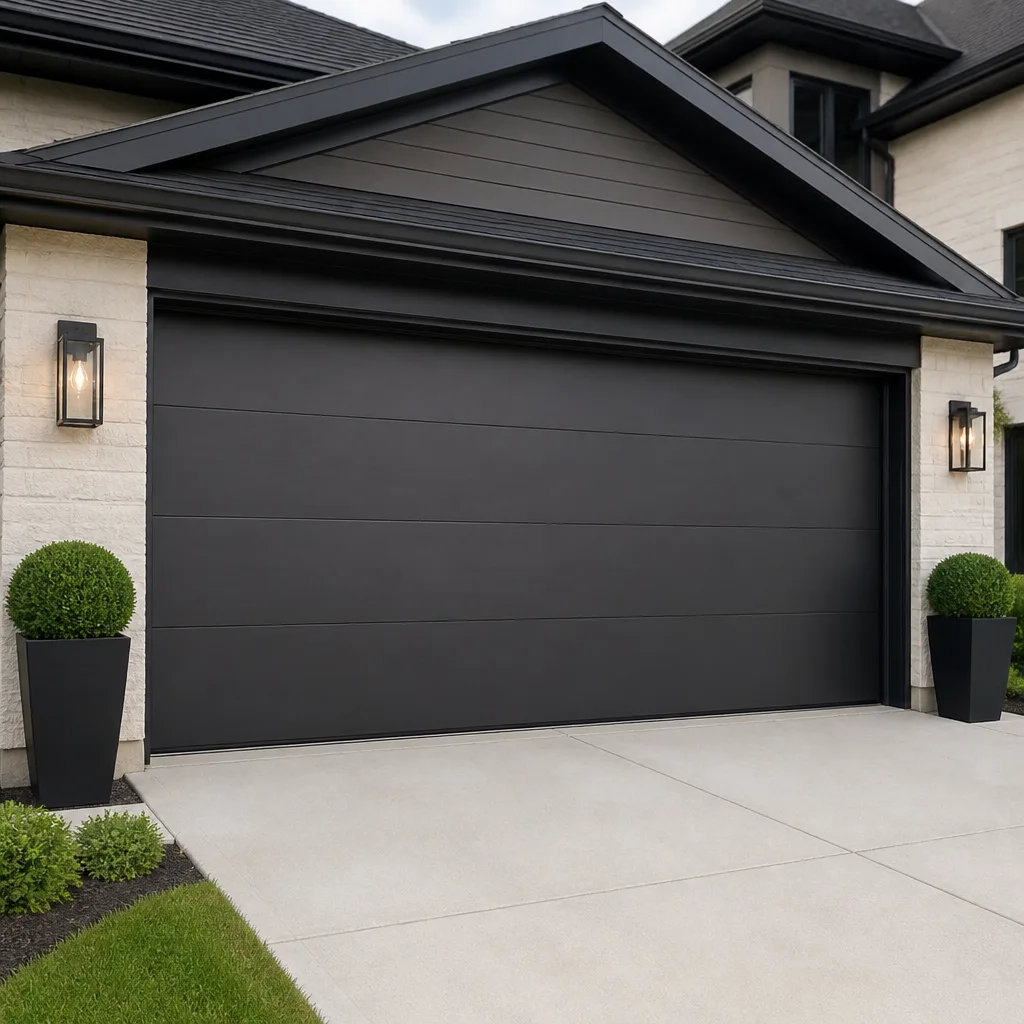 Modern flush
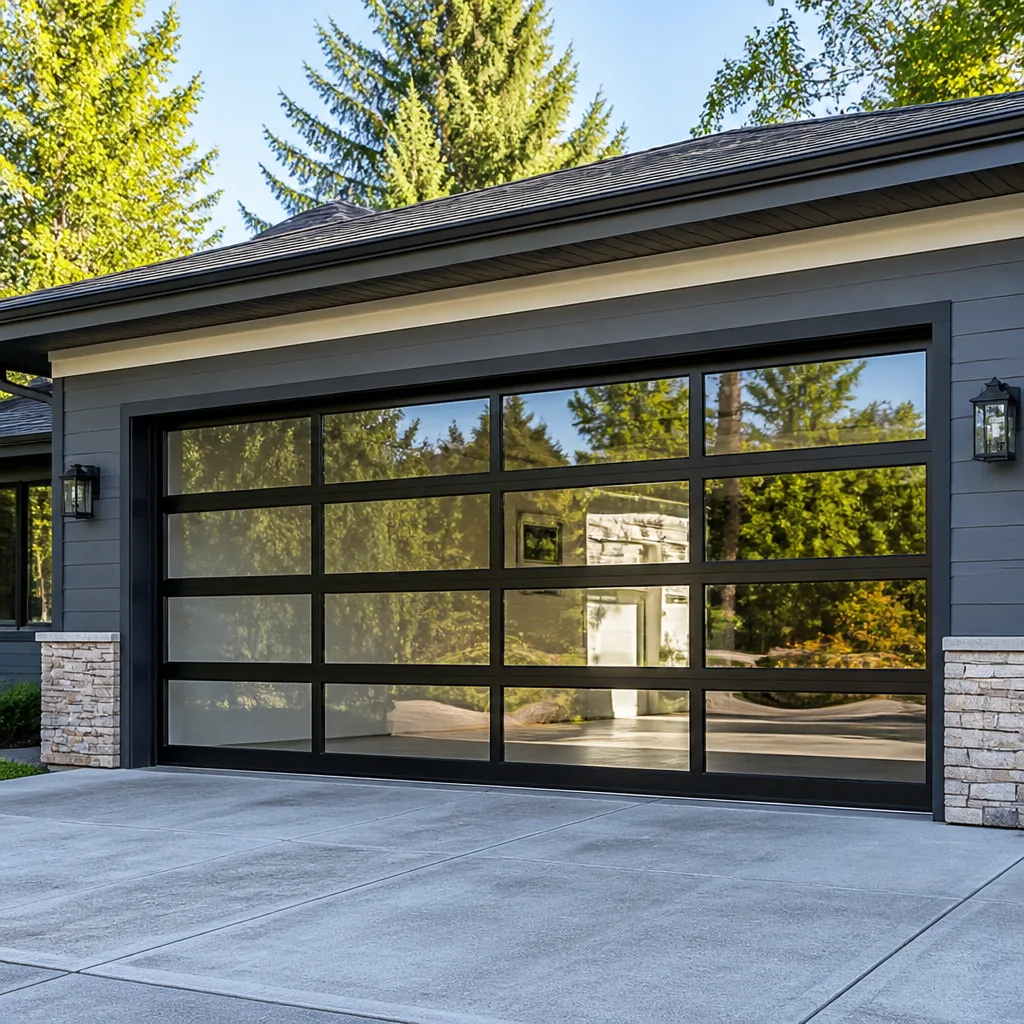 Full-view glass
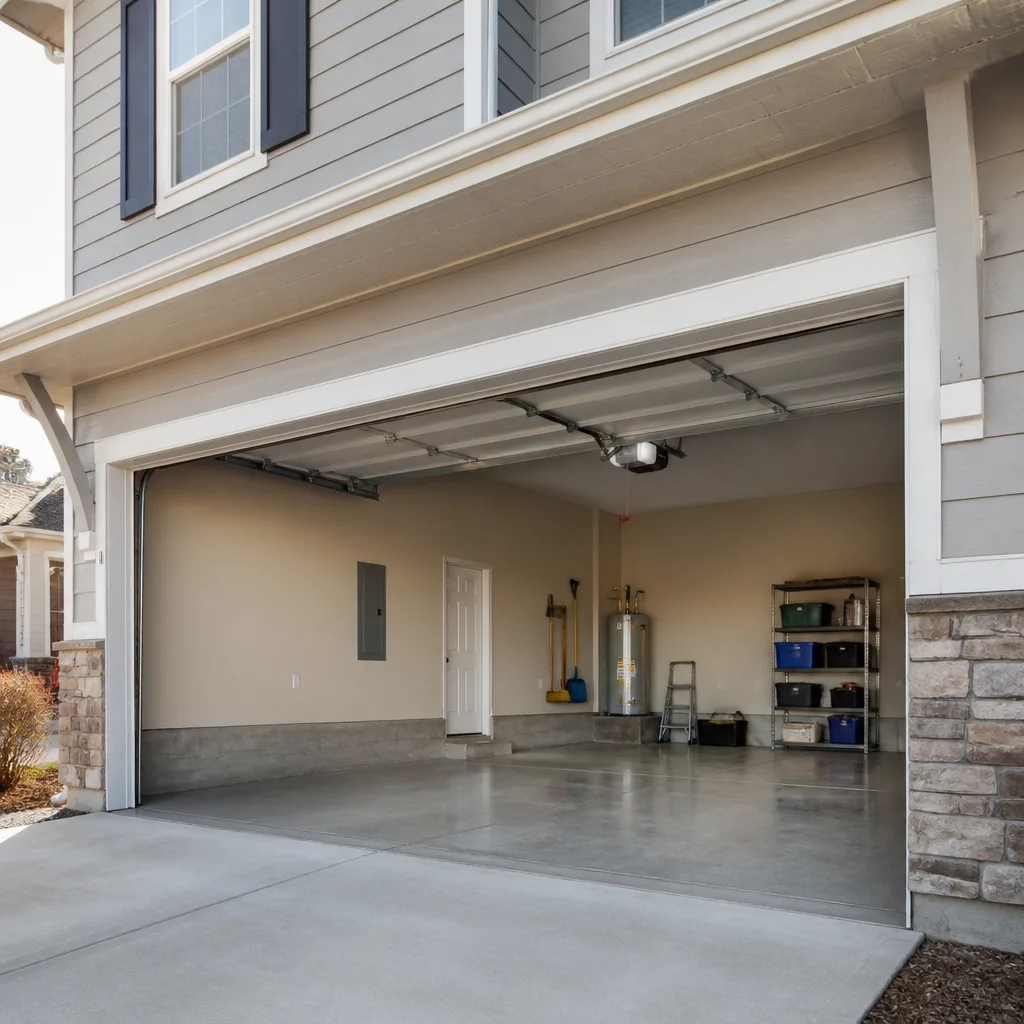 LiftMaster openers
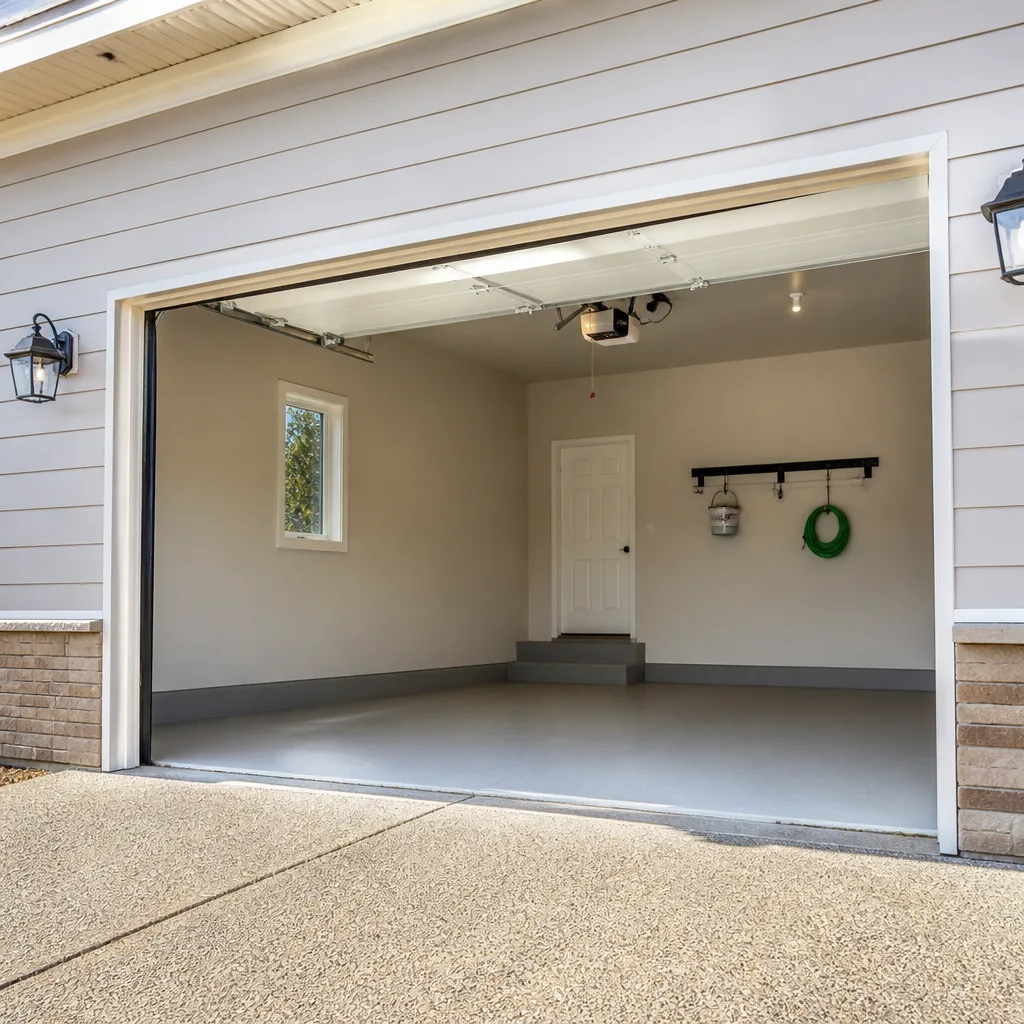 Chamberlain openers
Full 25-point door and opener safety check with every visit - springs, cables, rollers, tracks, and your LiftMaster or Chamberlain opener included
You get a price before we start. It does not change when the pro arrives.
Get your free estimateGarage Door Repair Troubleshooting in Youngstown: Common Problems and How to Fix Them
A garage door that shrieks, jerks, or hums without moving can look like five unrelated problems. Usually it’s one worn component at three different stages of failure. The squeal you hear this week is the opener strain you’ll deal with next month, and the spring that lets a door drop is often the same spring that was quietly wearing out long before. In this guide we sort Youngstown garage door problems into five symptom categories, show you how to tell which one you’re dealing with, and mark the exact point where a job shifts from “try this yourself” to “call someone before the door comes down.”
Quick Answer
Most garage door problems in Youngstown fall into five groups: door won’t move at all, door moves partially, door makes noise, door moves unevenly, and door opens but won’t close. You can safely check the opener, the photo-eye sensors, and the track alignment yourself. Anything involving the springs, cables, or the torsion bar is a stop-here job. Those parts store enough force to injure you, and they need a trained technician with the right tools and winding bars.
Styles & brands we work with
- Raised-panel steel
- Carriage house
- Modern flush
- Full-view glass
- LiftMaster openers
- Chamberlain openers
Table of Contents
- The Five-Symptom Diagnostic Framework
- Symptom 1: The Door Won’t Move
- Symptom 2: The Door Moves Partially
- Symptom 3: The Door Makes Noise
- Symptom 4: The Door Moves Unevenly
- Symptom 5: Opens Fine, Won’t Close
- Why Youngstown Climate Wears Doors Faster
- When to Call a Professional
- Frequently Asked Questions
The Five-Symptom Diagnostic Framework
Before you touch anything, identify what the door is actually doing. Every garage door failure lands in one of five buckets, and each bucket has a different short list of causes. This matters because the fixes for “won’t close” and “won’t open” have almost nothing in common, even though both feel like the door is broken.
Here’s the honest sorting:
- Won’t move at all. Usually the opener, the power, or a snapped spring. Test the opener first, and if the door won’t lift freely by hand after you pull the release cord, the spring is the problem.
- Moves partially then reverses. Sensor obstruction, a misread limit switch, or a door binding in the track.
- Makes noise. Rollers, hinges, and tracks that need lubrication or have worn out. The noise itself is harmless; what it tells you about the parts underneath isn’t.
- Moves unevenly. A stretched cable, one broken spring in a pair, or a bent track. This one usually ends in a pro call.
- Opens but won’t close. Almost always the safety sensors or something blocking the close cycle. This is the easiest one to solve without a technician.
Determine the category, run the safe checks below, and you’ll know within ten minutes whether you’re looking at a five-minute adjustment or a job that belongs with someone trained on the spring system. We handle garage door repair as a single-trade specialty, which means we’ve run this exact diagnostic thousands of times across every common brand.
Symptom 1: The Door Won’t Move
Start at the opener. Listen for the motor. If the motor runs but the door doesn’t budge, the drive is disconnected or a spring has failed. If the motor is silent, you’re looking at power, a dead remote, or a blown logic board.
Safe checks you can do
- Confirm the wall switch works. If the wall switch operates the door but the remote doesn’t, the remote or the receiver is the issue.
- Look at the opener for a diagnostic light pattern. Modern units from LiftMaster, Chamberlain, and Genie blink codes that tell you what’s wrong. Count the flashes and look it up in the manual or the brand’s support page.
- Pull the red emergency release cord. This disconnects the door from the opener. Lift the door by hand.
- If the door lifts easily by hand, the opener is the problem. If the door is heavy or won’t lift, the spring is gone.
Where this becomes a stop-here job
If the door is heavy or comes down hard, stop. That is a spring or cable failure. A torsion spring under tension can cause serious injury, and the same goes for the cables running along the sides. Never attempt to unwind, cut, or adjust a spring yourself. Call us and we’ll send a trained technician. Spring repairs done safely, the first time, is the whole point.
If the opener is the culprit, that’s a different story and usually fixable on a schedule. Our team handles garage door opener repair across every major brand, from smart-home-integrated LiftMaster and Chamberlain systems to older Genie units, so we know the diagnostic codes and the replacement parts for what’s actually hanging in your garage.
Symptom 2: The Door Moves Partially
A door that travels a few inches and reverses, or stops halfway up, is usually telling you one of three things: the travel limits on the opener are off, the door is binding in the track, or something is triggering the safety system mid-travel.
Opener limits and force settings
The opener has two adjustments that matter: travel limits (how far the door goes) and force sensitivity (how hard it pushes before reversing). If your door reverses at the same spot every time, start with the limits. On most units there’s a set of up and down buttons on the opener housing or a menu on the digital display. Resetting the limits is a safe, documented procedure you can find in the manual for whatever brand you own.
Be careful with force sensitivity. Turning it up to get past a sticking door masks a real problem, and it can cause the opener to push hard enough to damage the door panel or the track. We see this a lot: someone maxes out the force setting, the door starts working, then three weeks later the opener’s gear assembly fails. Don’t do that.
Binding in the track
With the door disconnected from the opener (pull the release cord), raise the door slowly by hand. If it catches at a specific point, you’ve found the bind. Look at the vertical tracks for bends, and look at the rollers for flat spots. A single bent roller can cause the door to travel unevenly and reverse partway up.
- Rollers: check for flat spots, cracks, or loose stems. Nylon rollers wear out more quietly than steel ones.
- Hinges: check for loose or bent hinges along the panel seams.
- Track: check for dents, especially near the curve where the vertical track meets the horizontal track.
If the door is binding because the track is bent or the panels are out of alignment, don’t force it. Call us and we’ll look at it the same day you reach out. A bent track gets worse the longer you run the opener against it.
Symptom 3: The Door Makes Noise
Noise is the earliest failure signal, and it’s the one people wait longest to act on. A squeaking, grinding, or rattling door is telling you which component is wearing. Treating the noise early keeps the repair small.
What each sound means
- Squealing. Metal-on-metal friction, usually the torsion spring coils, the rollers, or the hinges. Lubrication is the fix, but not with WD-40. Use a garage door lubricant.
- Grinding. Worn rollers or a bearing plate going out. This is a real replacement, not a lube job.
- Popping or snapping. A cable slipping off a drum, a spring beginning to fail, or a hinge that’s pulled loose from the panel. Any popping from the spring area is a stop-here signal.
- Rattling. Loose hardware. Tighten the bolts on the hinges and the brackets, but don’t over-tighten the panel bolts. They need a little give.
Lubrication routine
Twice a year is the right cadence. Spray the torsion spring coils, the rollers, and the hinge pivots with a white lithium or silicone garage door lubricant. Don’t use grease on the tracks. Tracks should be wiped clean and dry, not lubricated. That’s the most common lubrication mistake we see in Youngstown garages, and it’s an easy one to avoid.
If the noise starts suddenly and comes with a visible drop in door height, stop and call. That’s a spring going, and the door is no longer safe to operate until it’s repaired.
Symptom 4: The Door Moves Unevenly
The door rises on one side faster than the other, or it hangs visibly crooked when open. This is the symptom category where the diagnosis runs from “needs a small adjustment” to “call immediately,” and the difference is easy to check.
- Look at the springs. Torsion systems have one spring or a matched pair mounted on the shaft above the door. Extension systems have springs running along the horizontal tracks on each side.
- If one extension spring is visibly stretched out compared to the other, it’s failed. Call. Don’t run the door.
- If you have a torsion system and the door sags on one side, look for a slack cable on that side. A slack cable is a serious failure. Call.
- If the springs look intact and the door still tracks unevenly, look at the rollers and the track. A single bent roller or a dented vertical track can make the door bind on one side.
Uneven tracking is a genuine safety issue because it puts uneven load on the opener and the spring system simultaneously. Running the door like this accelerates wear on parts that are already under stress. Our team does garage door spring repair as a core competency, and this symptom category is where we spend most of our time. If the door is hanging crooked, call (888) 694-1055 and we’ll get a technician out the same day.
Symptom 5: Opens Fine, Won’t Close
This is the one that trips people up, and it’s almost always the safety sensors. The door opens normally, but when you hit the button to close, it comes down a few inches and reverses, or it doesn’t move at all.
Check the sensors first
The safety sensors are the two small units mounted on the bottom brackets on each side of the door opening, about six inches off the ground. Each one has a small LED. If the sending sensor’s LED is solid and the receiving sensor’s LED is off or blinking, the sensors aren’t seeing each other.
- Wipe the sensor lenses with a clean cloth.
- Check the alignment. The two sensors should face each other at the same height.
- Look for anything blocking the invisible beam: a broom, a bike, a rolled-up floor mat, piled snow in the winter.
- Check the wires. The sensor wires are small and run along the door frame; a pulled wire or a loose connection is common.
If the sensors check out
Next up is the manual lock. Some doors have a slider lock on the track that prevents the door from opening when engaged. If that lock is engaged, the door will open but not close, depending on the opener. That’s a two-second fix: disengage the lock.
After that, it’s the opener’s close limit setting, or a wiring problem in the wall control. If you’ve checked the sensors, the lock, and the wall switch and the door still won’t close, that’s when you call. Our garage door repair team handles this routinely. It’s often a five-minute fix once we’re on-site with the right meter and the brand’s diagnostic reference.
Why Youngstown Climate Wears Doors Faster
Youngstown sits in a climate that punishes garage door hardware more than most of the country. The freeze-thaw cycle is the big one. In a typical Mahoning County winter, temperatures swing above and below freezing repeatedly through the season. Every one of those swings drives a tiny bit of moisture into the steel of the track stringers, the hinges, and the spring coils. The problem isn’t the cold. It’s the cycling: water works in, freezes, expands, thaws, and repeats. Over a season, that cycling accelerates corrosion on the tracks and surface pitting on the spring coils. A spring that would last years in a dry climate fatigues faster here because the pitting becomes a stress point where cracks start.
Road salt makes it worse. The salt kicked up on the road in front of the house migrates onto the bottom of the door, the bottom brackets, and the lowest rollers. Salt accelerates rust on any exposed metal, and the bottom seals and bottom panels take the hit first. You’ll also see salt residue pool on the garage floor near the threshold, where it can splash up onto the lowest hinge after a wet winter.
The practical consequences:
- Springs in Youngstown tend to fail earlier than the manufacturer’s general estimate would suggest.
- Tracks corrode at the bottom curve and the lowest vertical section first.
- Rollers flatten faster in cold weather because the door travels harder on a cold, stiff track.
- Lubrication matters more here than the twice-a-year baseline. A third application, ideally in early winter before the deep freeze, pays off.
The design of the house matters too. Many Youngstown garages are attached to homes built in the mid-century decades, and a lot of them still run the original tracks. Original steel track stringers can be decades old, and the bottom sections of those tracks are the ones most likely to be corroded. If you have an older door, get the track checked once a year. Small rust pockets are cheap to treat; bent tracks from a corroded roller are not.
One more local reality: a lot of Youngstown homes have single-car garages with tight clearances. That tight clearance changes what fits. When we replace a spring or an opener, we’re working with the exact tolerance of what’s there, which is why brand fluency matters. We work on Clopay and Amarr doors, Chamberlain, Genie, and LiftMaster openers, and we know the tolerances and quirks of each. The wrong-size spring or the wrong opener on a tight single-car install is how small problems become expensive ones.
See the difference
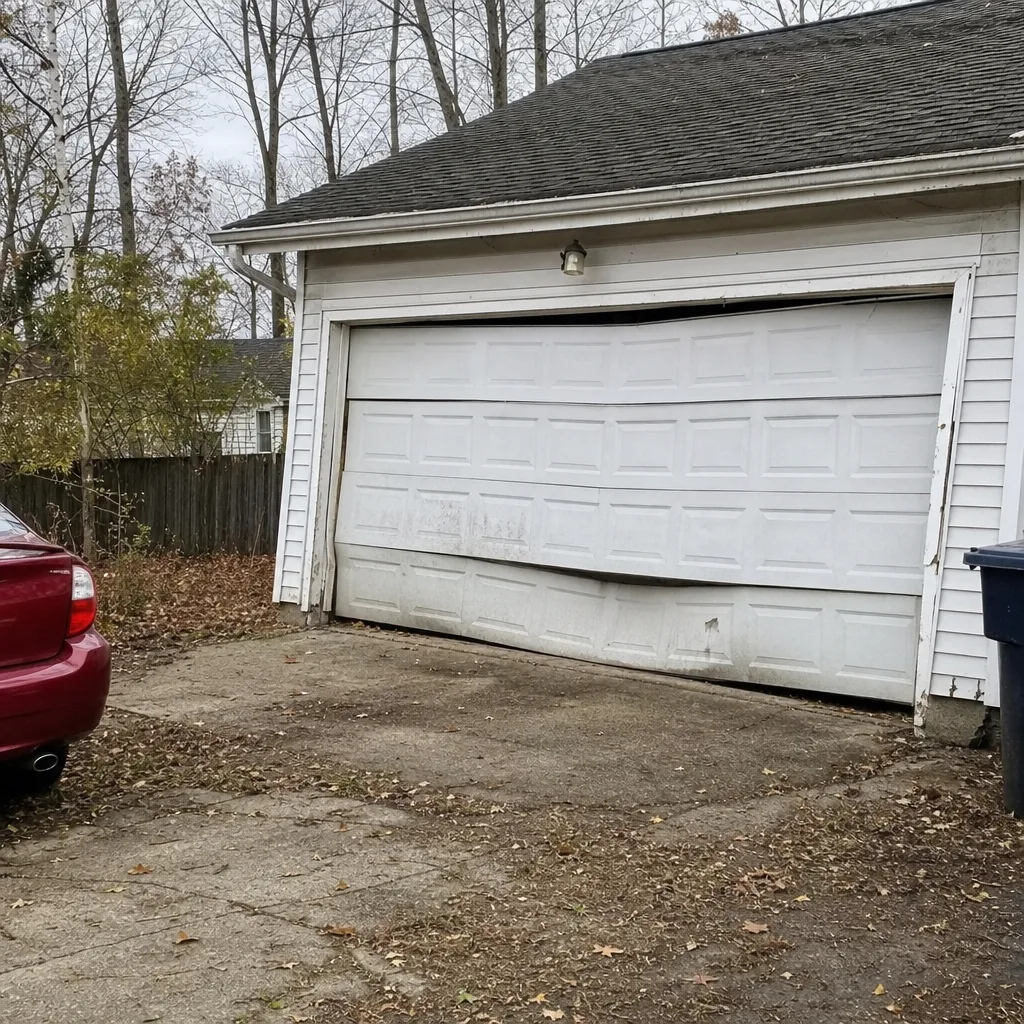 Before
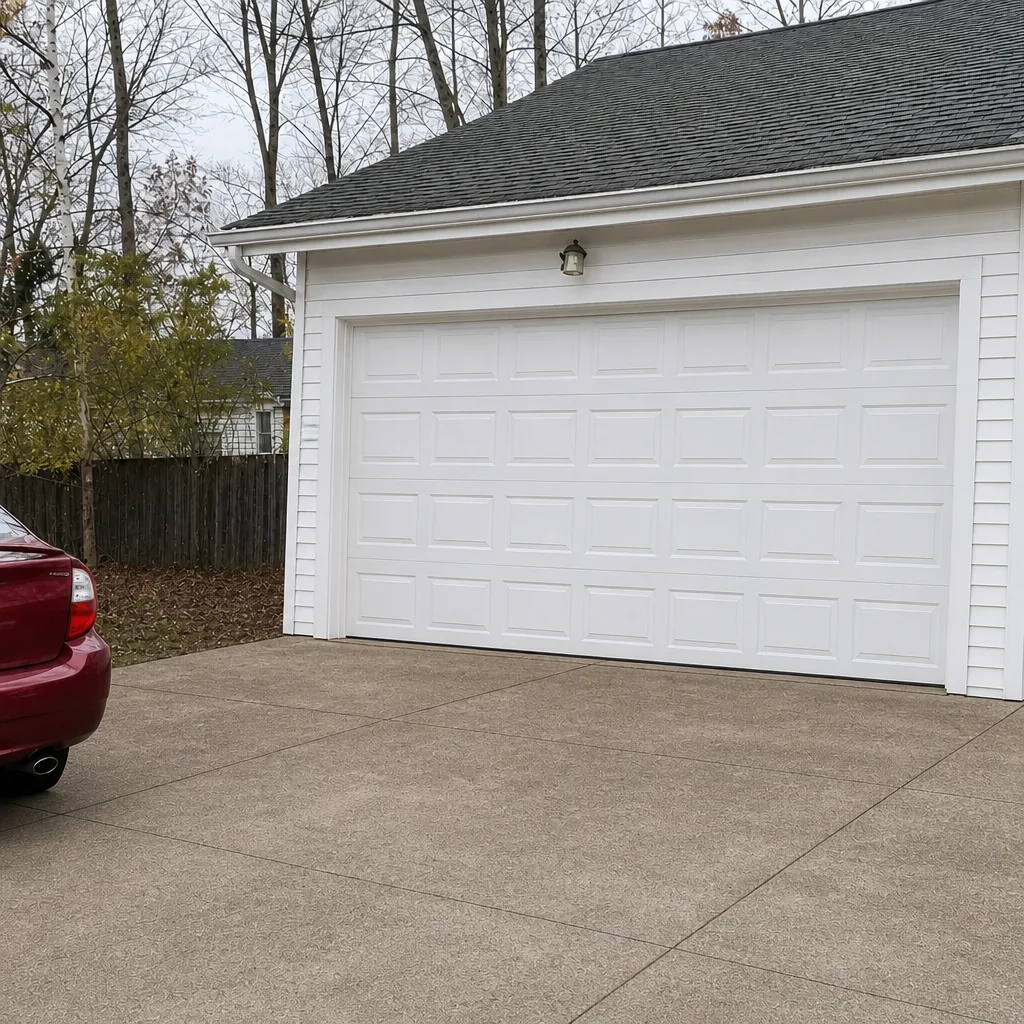 After
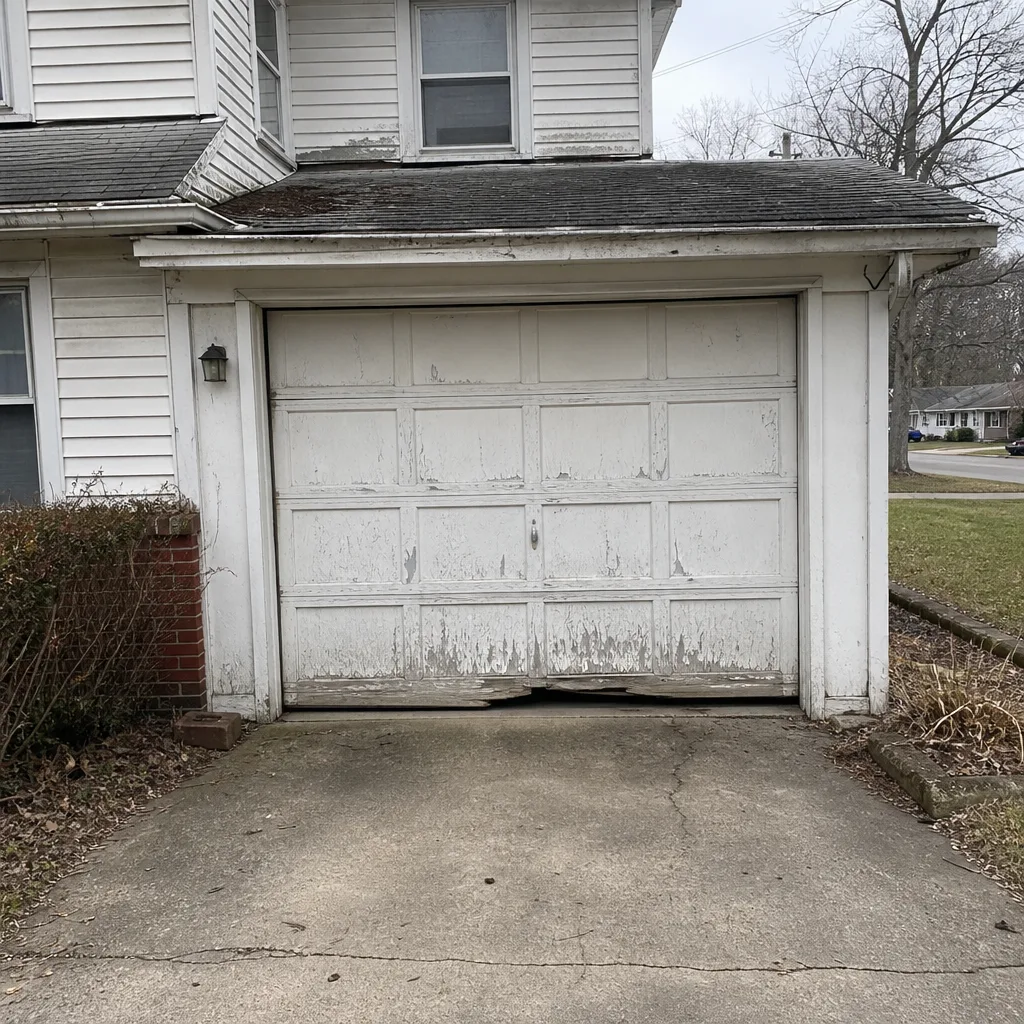 Before
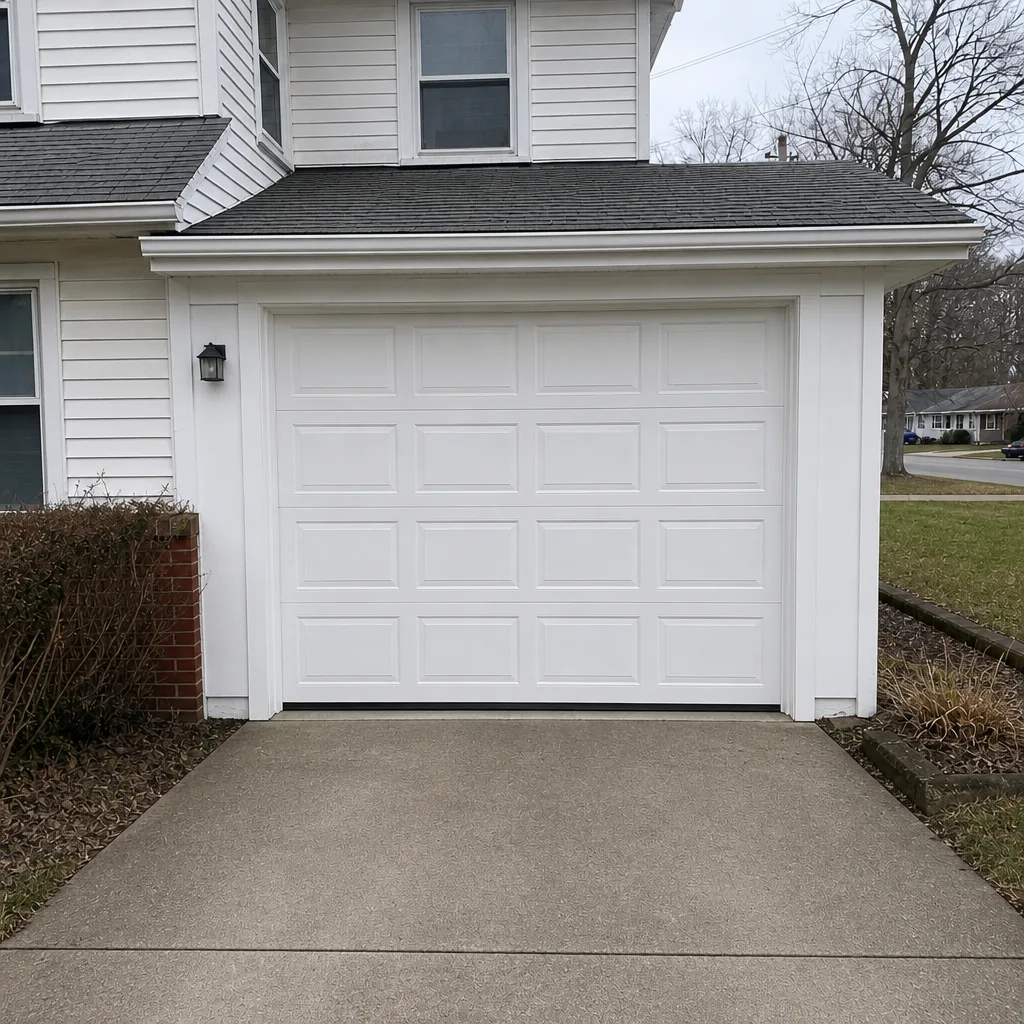 After
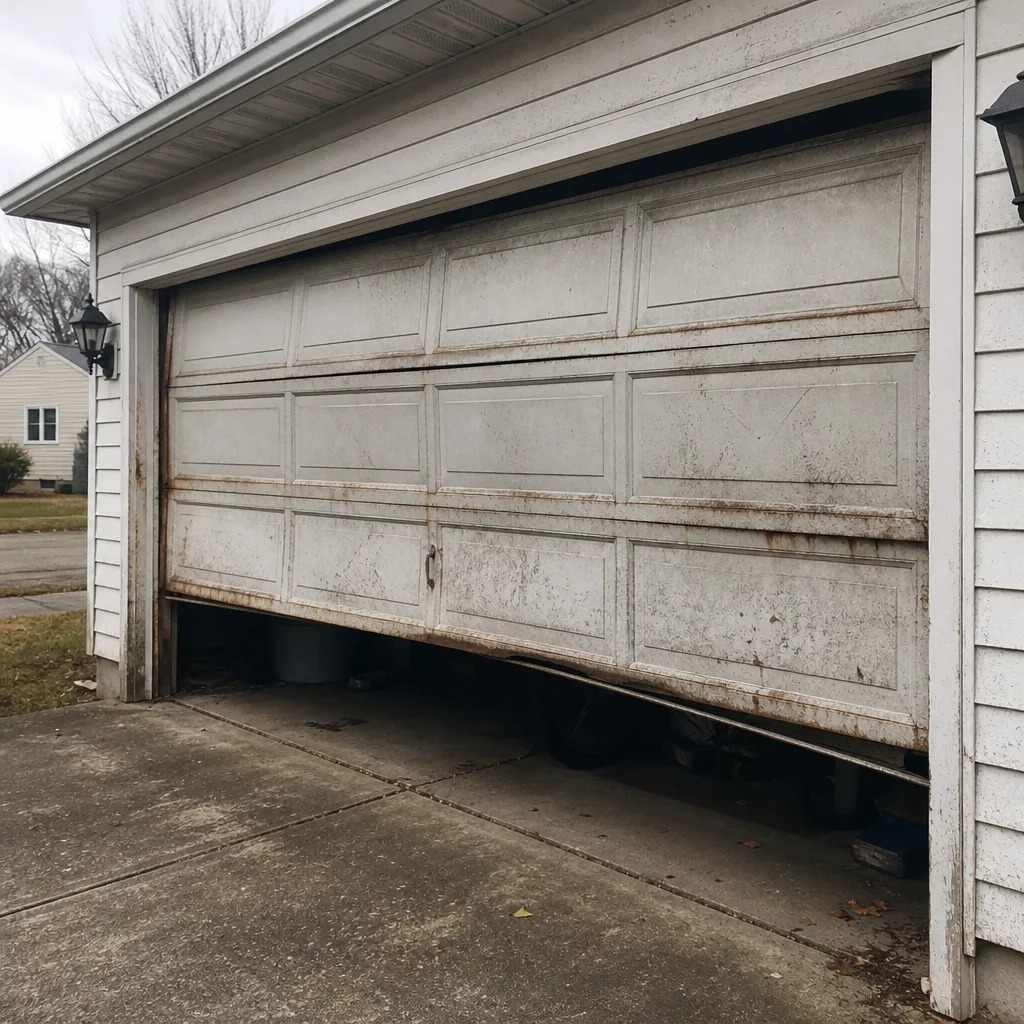 Before
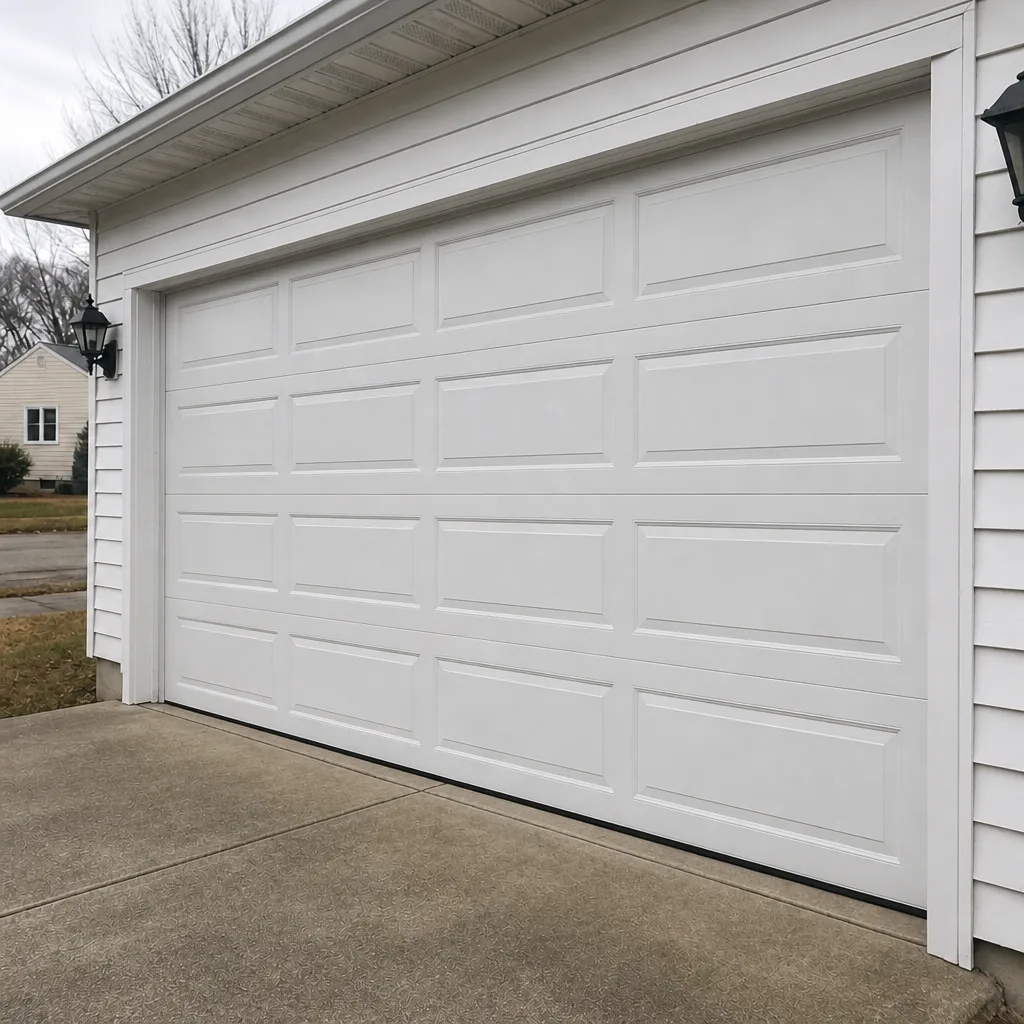 After
How to Test Whether It’s the Opener, the Spring, or the Track
This is the single most useful thing you can do before calling. It changes a quote trip into a repair visit, which saves you time and often a second appointment.
Test the opener
Hit the wall switch and listen. If the motor runs and the door doesn’t move, the drive is disconnected or the spring is gone, not the opener. If the motor doesn’t run at all, the opener or the power supply is the problem.
Test the spring
With the door in the closed position, pull the red emergency release cord. Then lift the door by hand slowly. Two things to note:
- If the door feels light and you can lift it easily, the springs are working. The problem is the opener.
- If the door feels heavy, like you’re lifting a solid weight, one or both springs have failed. Stop. Don’t lift further. Call us.
This is the only safe hands-on spring test. Do not try to check spring tension by looking at the coils, and never attempt to adjust the torsion bar or the winding cones yourself.
Test the track
With the door still disconnected, look along each vertical track. Run your hand down the inside edge (lightly; there’s sharp metal) looking for dents or bends, especially in the curve where the vertical transitions to horizontal. Then look at each roller. A gray or discolored roller is worn. A flat spot on the roller means it needs replacing. Call us if the track is bent. Track straightening is a real repair, not a hammer-and-pry-bar job.
What Information to Have Ready When You Call
The better your first call, the faster the fix. Here’s what we ask every time, and what you should be able to tell the technician before they arrive:
- What the door is doing. Be specific: won’t move at all, moves a few inches and reverses, opens but won’t close, moves unevenly. The symptom category tells us which tools to load.
- The door brand and model. Clopay, Amarr, Wayne Dalton, Raynor, or another. The model is usually on a sticker inside the door panel or on the door’s edge.
- The opener brand and model. Look for the name and model on the opener housing, usually on top or on the back panel. This determines which diagnostic reference we bring.
- The door type. Single-car or double-car, sectional, one-piece, or roll-up.
- When it started. Sudden failures and gradual failures point to different causes. If the door has been slowly getting harder to open for a month before it stopped, that’s a spring fatigue pattern.
- What you’ve already tested. Tell us if you’ve checked the sensors, reset the opener, or pulled the release cord. It saves us repeating work you’ve already done.
- Your address and whether it’s attached or detached. Detached garages can have different power setups and different moisture exposure.
That information is the difference between a diagnostic-and-repair visit and a quote trip. It’s also why we ask about the brand up front. Certified service across LiftMaster, Chamberlain, Genie, Clopay, Amarr, Wayne Dalton, Craftsman, and Raynor means we’re not guessing at the tolerances. We work on the brand already in your garage.
Common Mistakes to Avoid
- Forcing a sticking door with the opener. If the door is binding in the track, running the opener against the bind stretches the springs and wears the opener’s gear assembly. Disconnect the door and free the bind by hand before running the opener again.
- Lubricating the tracks. Tracks should be clean and dry. Lubricant on the tracks attracts grit and turns into a paste that clogs the rollers. Lubricate the rollers, hinges, and spring coils only.
- Turning up the force sensitivity to “fix” a sticking door. It masks the real problem and can push hard enough to damage the panel or bend the track. It’s a workaround, not a repair.
- Assuming the sensors are fine because the door opens. The safety system only prevents closing. A door that opens but reverses on the way down is almost always a sensor issue, and it’s the most common cause of “won’t close” calls we get in Youngstown.
- Ignoring a single broken spring in a pair. On a two-spring torsion system, a broken spring means the second spring is carrying double the load. Running the door on one spring accelerates the failure of the other, and it can be dangerous. Replace both.
- Watching a noise get worse through a winter. The freeze-thaw cycle in Youngstown makes noise a reliable early-warning signal. What sounds like a squeal in November is often a failing bearing plate by February.
- Letting winter salt sit on the bottom panel. Rinse the bottom panel and the bottom brackets periodically through the winter. Salt residue on the bottom of the door is where corrosion starts, and the bottom seal and lowest rollers take the damage first.
When to Call a Professional
Some problems are worth a phone call the moment you notice them. Call us immediately if a spring is broken or the door is hanging heavy, if a cable is slack or off its drum, if the door is off its tracks, if the door opens but you can’t stop it from closing, or if the door is crooked when open. Also call if the door has become genuinely unsafe to operate: the motor runs, the door doesn’t, and you can’t lift it by hand. That’s a spring or cable failure, and the door should stay closed and untouched until a technician is on-site.
Non-urgent issues still worth a call: a door that’s getting progressively harder to open, one that squeals louder each month, or a track with visible rust pockets. We’re happy to look at those on a schedule. When the door won’t move at all, our emergency garage door service is a genuine named offering, not a buried footnote. Garage Door Repair Youngstown offers free estimates in Youngstown, so the first visit costs nothing to find out what’s actually wrong. Call (888) 694-1055.
Frequently Asked Questions
It’s almost always the safety sensors. The sensors are the two units mounted near the floor on each side of the door opening, and if they’re misaligned, dirty, or blocked, the opener won’t complete the close cycle. Wipe the lenses, check that they face each other at the same height, and look for anything blocking the beam. If that doesn’t fix it, check the manual lock on the track. If it still won’t close, call (888) 694-1055 and we’ll get a technician out the same day.
No. A torsion spring under tension stores enough force to cause serious injury, and the tools required (winding bars, a proper winding procedure) aren’t something a homeowner should handle. Even a broken spring has residual tension, and the cable system next to it is just as dangerous. Spring repair is a stop-here job. Call us and we’ll send a trained technician. Spring repairs done safely, the first time, is exactly what we specialize in.
It depends on what’s actually wrong, and we quote per job after we see the door. A sensor realignment or a limit reset is at the low end; a spring replacement or a track repair sits higher. We give you a free estimate and a written price before any work starts, and that written quote is the price. You’ll never get an invoice that’s bigger than the quote you agreed to.
Cold weather stiffens the metal and thickens the lubricant, which makes friction more audible. The freeze-thaw cycle in Youngstown also drives moisture into the hinges and rollers, and that cycling accelerates wear. The usual fix is a proper garage door lubricant on the springs, rollers, and hinges, plus a look at the rollers for flat spots. Don’t lubricate the tracks. If the noise is a grinding or popping from the spring area, stop and call (888) 694-1055.
Usually not. The most common causes are sensor alignment, a dirty sensor lens, a blocked beam, or an engaged manual lock. None of those require a new opener. If the sensors and the lock check out and the door still won’t close, we can diagnose the close limit setting or a wiring issue in a single visit. Call (888) 694-1055 and we’ll look at it the same day.
We service all major residential brands, including LiftMaster, Chamberlain, Genie, Clopay, Amarr, Wayne Dalton, Craftsman, and Raynor. That covers both smart-home-integrated openers and older traditional units, plus the doors themselves. We work on the brand already in your garage rather than trying to talk you into replacing a working system. Call (888) 694-1055 for a free estimate.
Pull the red emergency release cord and lift the door by hand. If the door lifts easily, the opener is the problem. If it feels heavy and won’t lift, the spring has failed. Do that test once and note the result before calling. It’s the single most useful piece of information you can give us, and it usually turns the first visit into a repair visit rather than a quote trip.
The Bottom Line
Sort your garage door problem into one of five symptom categories, and the path becomes obvious. If the door won’t move at all, test the opener and the spring. If it moves partially, check the opener limits and the track. If it’s noisy, lubricate the right parts (and leave the tracks alone). If it’s moving unevenly, look at the springs and the cables, and call if anything is slack or hanging. If it opens but won’t close, start with the sensors. The spring and the cable are the stop-here line. Everything else you can safely check yourself, and the information you gather from those checks is what makes the first technician visit count. We work on Garage Door Repair Youngstown doors and openers every day. When your door tells you it’s failing, the fix is usually smaller than the fear. Call (888) 694-1055 for a free estimate.
We don’t just cover troubleshooting. From a single broken spring to a full new door, we handle opener repair, spring repair, full door repair, and new installation across the Youngstown area. Our technicians have up to 8 years of experience, and the local pro is licensed and insured as their state requires. Garage doors are all we do.
Written by the team at Garage Door Repair Youngstown.